dissabte, 19 de desembre del 2020

The Basics of DMR


Beginners Quick Guide | The Basics of DMR Digital Mobile Radio 

(Updated: 2020 April)

  •  Ham Talk  
  •  
  •  Posted by Jackson Chen  
  •  
  •    
  •  
  •  

--- by Jason Reilly


Introduction:

"The nice thing about standards is there are so many to choose from." I love the ironic humor in this statement; a standard should result in everyone doing things the same way in order to be compatible, and prevent having to constantly re-invent the wheel. Yet, everyone has to have their own standard! Just take two-way radio digital voice systems for example: there’s P25 phase 1 and phase 2, NDXN, DMR, TETRA, OpenSky, Provoice, and dPMR, along with a whole host of legacy digital voice modes as well. That doesn’t even consider the ham radio contenders, such as DStar, Fusion, FreeDV, some old offerings from Alinco & AOR and so on. And guess what? Absolutely none of them are compatible!

Choosing what digital voice standard you'll go with can be daunting. For emergency services and government communications, P25 is by far the most dominant, there’s no doubt about that. For business & private radio, DMR followed by NXDN is the two most popular choice. In the ham radio arena, the picture is a little less clear. DStar took an early lead, but Yaesu is keen to take market share with their Fusion offering. Hams have always been keen to leverage off existing commercial equipment, and it seems the most popular commercial system adopted presently is DMR.
Personally, I think DMR will take the lead in both the commercial business & private two-way radio field as well as in ham radio. This is helped in no small part by the ready availability of DMR radio equipment at prices that rival traditional analog two-way radio, and that one of the biggest names in two-way radio, Motorola, are throwing their weight behind DMR.


Motorola's SL7750 blurs the line between DMR radio and cellular mobile phone


Three flavours:


There are three "tiers" or levels of functionality for DMR systems.

Tier 1: The simplest form of DMR is Tier 1, which is mainly used for simplex communications, with no repeaters. The human voice is digitally sampled and compressed with the AMBE+2 codec, and then transmitted in this digital form to another radio.

Tier 2: Things start to get a bit more complicated here. With Tier 2 DMR, repeaters are used in a TDMA arrangement, with two "timeslots. What this means is that two completely separate radio transmissions can be going through the repeater at the same time; each radio takes turns in transmitting in short 27.5 millisecond bursts. In addition to this, radios can be set to logical closed groups called ’talk groups’, which you can think of as ’virtual channels’. Repeaters can be linked via the internet to form networks that can be as small as just two repeaters, or thousands of repeaters across the world. Again, the AMBE+2 codec is used to turn speech into compressed data for transmission. All amateur radio DMR systems are Tier 2, as are many business / commercial radio DMR systems.

Tier 3: This is effectively a trunked radio system on top of Tier 2. A pool of frequencies are used to carry the TDMA transmissions. This is used by more complex or larger networks for big businesses and commercial radio users.
 

The advantages of DMR:

So why go to all this trouble, when plain old analogue FM works perfectly well? DMR has the advantage that it four times more efficient when it comes to spectrum usage. For one 25 kHz analogue FM channel, you could fit four DMR transmissions. Not only that, but DMR offers some very flexible calling facilities - you can call one person, a group of people, or everyone in your fleet at once. While not every DMR network supports it, sending of data and short messages is also possible. DMR is also designed to be easy to network, with connections using IP, so creating wide coverage areas using a network of DMR repeaters is already built-in; cover your city or cover the entire country! Yet another advantage is because a DMR transmitter is only turned on about half the time due to it transmitting in bursts, battery life is longer.


TYT's hugely popular MD-380 can be bought for around $100


Some DMR Jargon:

Colour codes: Every DMR transmission uses a "colour code" which is very similar to CTCSS or PL tones in the analogue radio world. On a repeater or simplex frequency, every radio must use the same colour code to be able to communicate together. The main use for colour codes is for where two repeater coverage areas on the same frequency may overlap, different colour codes are used to ensure each radio accesses the correct repeater.

Timeslot: For Tier 2 and 3 systems, a timeslot is a slice of time, about 30ms long, that a radio can transmit in, or receive in. There are two timeslots per frequency, and you need to have your radio configured for the right colour code for the repeater, the correct timeslot and correct talkgroup for you to be able to hear anything.

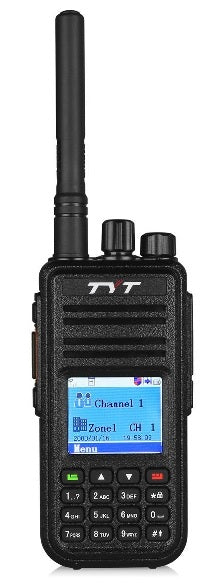
Zones: This is simply a collection of channels & talkgroups, all grouped together in one "zone" or bank. A radio user can switch zones to access a different lot of channels & talkgroups that they may wish to use. Typically a zones are divided into repeaters for different areas, so you might have one zone for the west side of a city, and another covering the east side of the city - but there's nothing to say that you must set up a zone that way.

Code Plug: This is a Motorola term that has stuck over the years, and in the DMR context means a complete configuration file of channels, talkgroups, zones, contacts etc. for a radio. The code plug can be saved to computer disc, and is used to program a radio to give it the functionality a user requires.

CPS: Another Motorola term, meaning Customer Program Software. Simply put, this is the software you’d use to create a "code plug" and configure your radio.

Hotspot: A small box that connects to the internet and acts like your own personal low power DMR repeater, useful if you're not in range of a DMR repeater to access. You can even take them with you and use your cell / mobile phone wireless data to connect the hotspot to the internet and be able to use DMR anywhere you get cellular signal. Most hotspots are multi-mode, handling not only DMR but DStar, Yaesu Fusion and P25 as well. ZUMspot, Jumbospot, Openspot, MMDVM etc are all examples of hotspots that you can buy or build yourself.


Radioddity GD-77, dual band, DMR & FM, I think the best bang-for-your-buck DMR portable, also around $100


So what's in it for me?

The use of DMR in radio hobbyist circles falls into two categories: ham / amateur radio and scanning receiver use. Lets take a quick look at each:

Ham radio: Hams have long taken advantage of surplus, second hand, or even new commercial radio equipment and re-purposed it for their own use, and DMR equipment is no exception. Worldwide, DMR enabled and connected repeaters are appearing and are interconnected to provide a huge linked network spanning the entire globe. Depending on the talk group selected, you could be communicating just around town, across your region, across the entire country, and some groups even cover the world. Motorola DMR equipment is frequently used, but increasingly the cheaper units, in particular TYT, have increased the affordability and availability of DMR equipment to the mass market. In some cases, you can get on air to the DMR scene for less than a hundred dollars!

Scanning: As the world relentlessly marches on to a digital future, many businesses and commercial interests have migrated their legacy analogue FM two way radio systems to DMR. There are scanners available that can hear DMR, enabling the scanning hobbyist to continue to listen to such transmissions. For those hobbyists who can’t justify the high price tag of those scanners to listen in to DMR, there are other alternatives: certain computer software can decode DMR with a regular scanner and a ’discriminator tap’, or a ’virtual audio cable’ if using an SDR, or if portable DMR reception is desired, an entry level DMR transceiver from TYT or Radioddity will do the job very well - to keep yourself on the correct side of the law, you should disable any transmit capabilities of these transceivers.

If you are looking for a quick guide on how to program the digital channels for your Radioddity GD-77 or RD-5R, take a look here:


Post original a : radioddity.com

dissabte, 10 d’octubre del 2020

Jikai -Teaser


This is JIKAI. 

JIKAI was born from a group of students from La Salle BCN as part of their final project - Arnau Barabeig, Alicia Ortega, Roure Ossó, Victor Zudaire, Xiao Peng Huang, Xavier Roca, Gaspar Segura and Alex Cabller.

With the help of their mentor, Sancho Albano and other university staff and students, they created a teaser trailer as a concept for this story, trying to each, develop as much as they could, their abilities in their respective fields.

About Jikai:

What are you willing  to do for a loved one? Ichiro and Haruka, two siblings surrounded by a legendary myth that will take them to the limit.

It is a story that takes place in a fictional medieval Japan - an epic journey of redemption and facing thyself's fears.


dimecres, 20 de setembre del 2017

dissabte, 26 d’agost del 2017

diumenge, 30 de juliol del 2017

PEE (PER) a bord

Ja fa temps que tot això de la vela m’havia captivat, però fins ara no havia passat d’anar d’acompanyant. Quan el meu amic Jordi C em va dir que hi havia escoles que organitzaven una setmana de navegació per tal de realitzar les pràctiques que exigeix el títol del PEE se’m va fer la llum. “Te’n vas de vacances i tornes amb el PEE a la butxaca”, em deia en Jordi. Bé, no exactament, encara em caldrà fer l’examen teòric.

Dit i fet. L’escola Neptuno és una de les que encara ofereix aquesta possibilitat, així que el 24 de juliol, jo ja estava a punt per embarcar. S’havia acabat l’ansietat que arrossegava els darrers dies davant d’aquesta experiència nova per a mi.


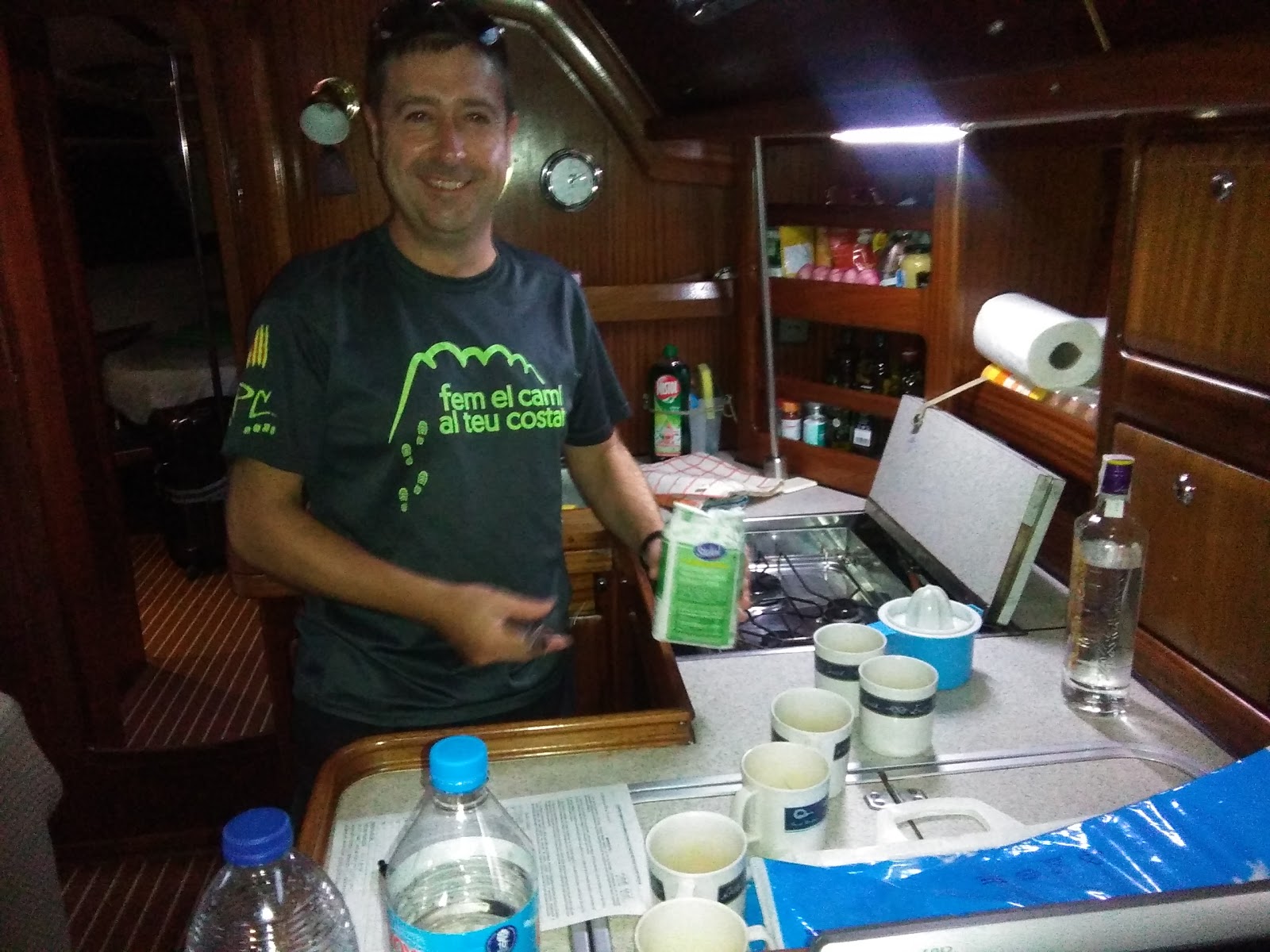
La tripulació era prou heterogènia per intuir que no tindríem problemes de convivència, 7 dies en un espai tant petit com el que hi ha en un veler pot posar a prova el caràcter més tranquil.
Primer, unes hores de formació sobre els sistemes de comunicacions en el mar -ROCA- i ja toca preparar l’embarcament al nostre veler Malpelo, un Bavaria 50, total 15 metres d’eslora, poca cosa! Al capità ja el coneixia de la jornada de portes obertes i, tret de les seves ulleres de ciclista, té la imatge d’un autèntic home de mar.


Arriba l’hora de fer la compra. No resulta fàcil preparar la llista per una activitat que no sabem cap de nosaltres com anirà. Podrem fer bon àpats al migdia? I la cuina del veler, permet fer pizzes per a 7 persones? Preparem una llista de menús? Amb tots aquests dubtes sense resoldre ja som al centre comercial i comença el show. Mentre uns busquen el producte de la marca blanca que surt més barata, d’altres escullen la millor mostassa, que si no, no val la pena. Galetes, sense oli de palma, sisplau! Cervesa, ah! que algú la vol sense alcohol! Coca-cola sense sucre! Massa tard per comprar-ne de la normal. Paper de WC, que no en falti!  I així, fins omplir 3 carros de la compra.


Podeu imaginar la cara del “capi” quan ens veu arribar amb aquest carregament?


Finalment la meteo no ens permet sortir el dilluns a la nit, ni tampoc navegar seguint la costa fins a algun lloc alternatiu, així que no serà fins dimarts al matí que salpem cap a Sóller, a l’illa de Mallorca, on esperem arribar entrada la nit. La mar de fons, molt moguda a resultes de la tempesta del cap de setmana, fa estralls entre la “tripu”, malgrat l’aprovisonament de Biodramina. A mi, el truc de menjar una poma em deixa al 100%. Al final, els consells de la gent gran són els que funcionen!


Al llarg de la travessia diürna, el “capi” intenta explicar-nos detalls de navegació, manipulació de veles etc., no sé si tota la “tripu” li fa massa cas, però quan arriba la posta de sol, ens regala un ”Nessun Dorma” que ens deixa a tots bocabadats. Aquest dia el passem tots a dieta. I tanta compra que hem fet! Això no promet gens!


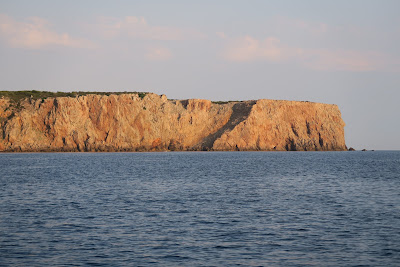
Els dies que segueixen naveguem de Mallorca a Menorca, trobem de tot, cales on hem de sortir corrents perquè ens trobem el mar a sotavent i d’altres on no hi trobem ningú.  També parem al Port d’Alcudia entremig de vaixells que només podrem mirar i somiar.


Nosaltres, ara, ja som capaços d’aguantar-nos per coberta i a les cabines, tot i els moviments dels veler, que fins dijous no respirarà una mica de calma. Caps, nusos amb noms raríssims, major, gènova, trinqueta, botavares, cornamuses, a babord, a proa, a popa i moltes més paraules estranyes que caldrà interioritzar fins a completar el programa de pràctiques. Vés que els costaria dir a la dreta o a la esquerra? Hissar veles,caçar la major, posar el fre a la major, fondejar, àncores, amortidors, canal 16, squelch, AIS i molts més detalls que anem aprenent sense adonar-nos-en. Banys a alta mar, banys a prop de cales, banys a la platja, excursions a peu i més postes i sortides de sol, han fet d’aquest viatge una experiència inoblidable i del tot recomanable, i més si tenim en compte que hem après quasi tot el necessari per iniciar el nostre camí en aquest món, tan fascinant com desconegut per  a mi.


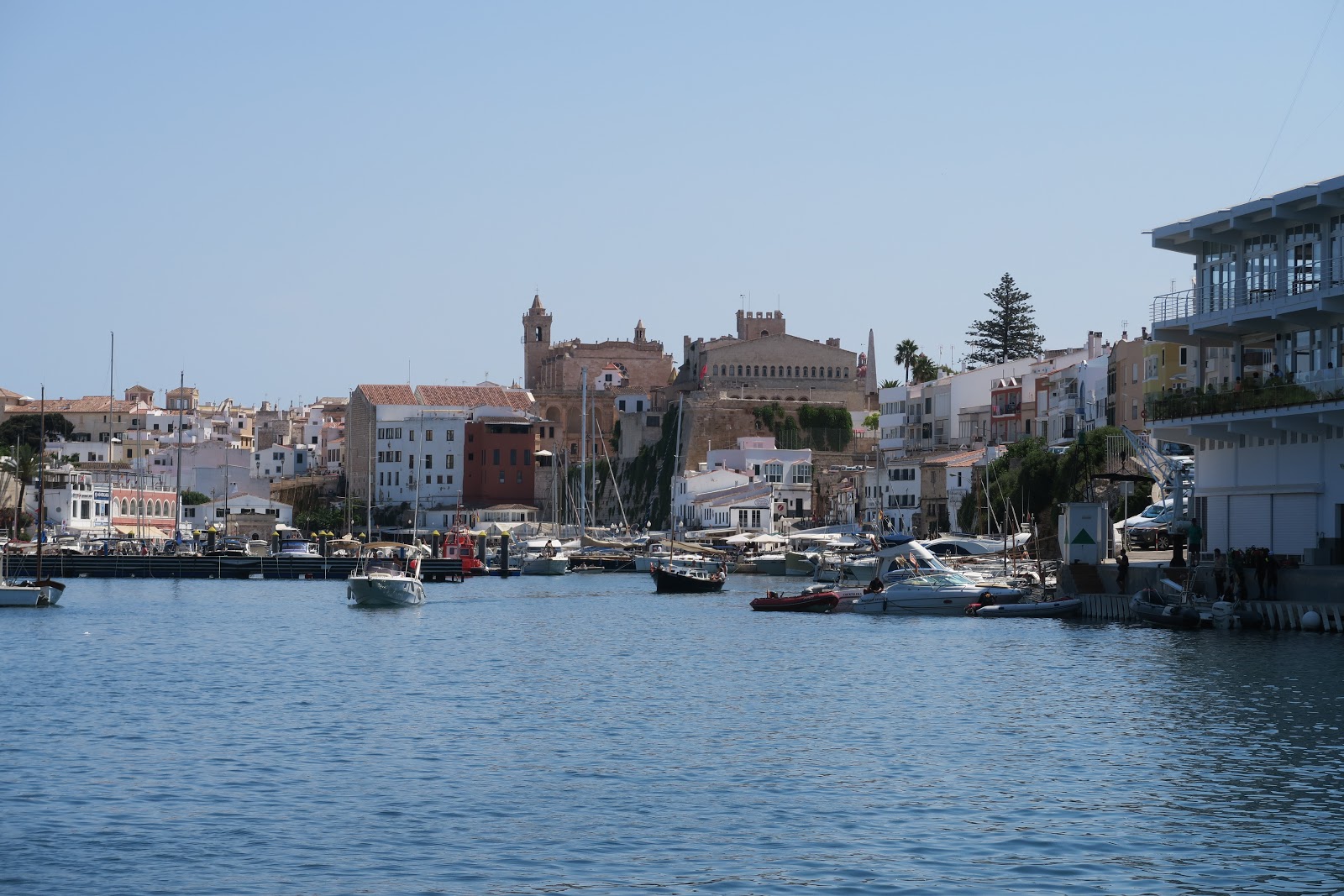
Dissabte toca preparar la tornada, anem a Ciutadella a carregar gasoil i a fer la compra obligada de l’ensaïmada i la sobrassada. Només podem quedar-nos a port el temps just, de manera que els companys s'han de conformar amb l'olor de paella que han sentit en baixar a terra.


Sortim de port i el “capi” ens regala l’última sorpresa. Fondeja el veler a prop de l’entrada del port i no li fa mandra tornar a baixar la dinghy per tal de tornar al club marítim a buscar una paella que ens menjarem amb delit a la banyera del veler. Per fi entenc per què la gent que prova això de navegar ja no ho pot deixar!


La travessia nocturna de tornada és tot el contrari de la de vinguda, la mar està en calma i el vent, tot i que molt canviant, no supera els 2 nusos amb algunes estones a 18. La humitat és tan alta que si et poses sota la major sembla a moments que plogui! No hi ha opció, motor i major per estabilitzar. A la nit, la feina és descobrir i interpretar els llums dels vaixells enmig de la negror de la nit, i saber qui té preferència, ja que nosaltres ara anem a motor.


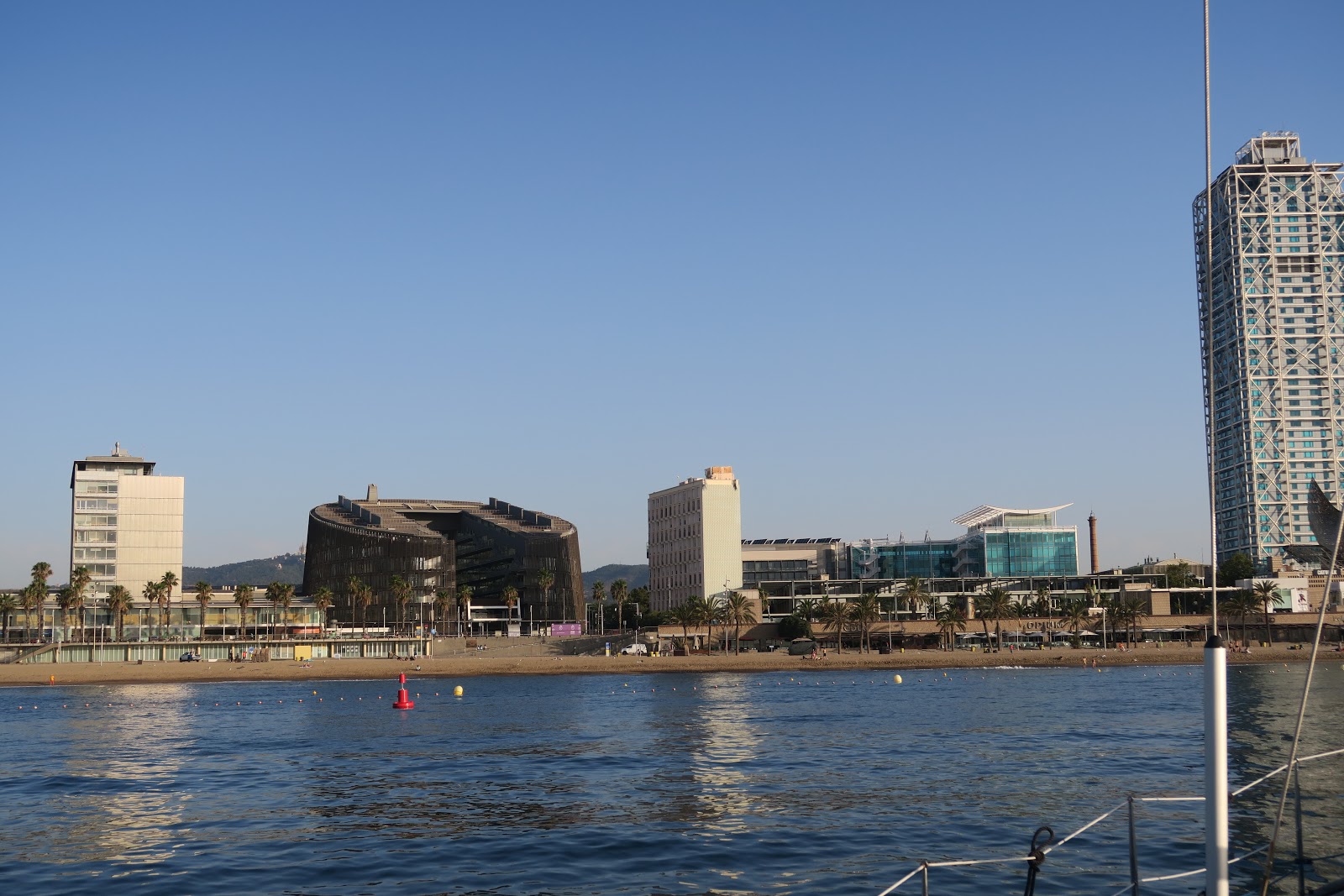
Avancem molt ràpidament i arribem a primera hora del matí al Port Olímpic després de veure una sortida de sol espectacular i d’esquivar un vaixell fantasma que només té llums a estribord i no pas a babord, que és per on l’hem vist primer.


Si vols fer el PEE (o PER), no ho dubtis: “PEE a bord” amb navegació fins a les Illes des de Barcelona!


Gràcies als companys de viatge per fer-ho tot tan fàcil: Jose, Jaume, Oscar, Philippe, Sònia, Xavi,


Contacte Neptuno: http://www.neptuno.es/
Contacte capità: http://nauticocean.com/

La ressenya del capità: enllaç

Ruta: Barcelona - Mallorca, Port de Soller, Cap Formentor, Badia d'Alcudia - Menorca, Cap d'Artruch, Cala'n Bosch, Platja s'amarador, Cala Algaiarens, Cala Sa Galera, Ciutadella - Barcelona